1/6 A quick map of the embodied AI model teams I’m recently following.
I’m mainly interested on the "robo brain", including model, data, and training.
Three broad groups: VLA/action policies, world-action models, and alternative architectures.
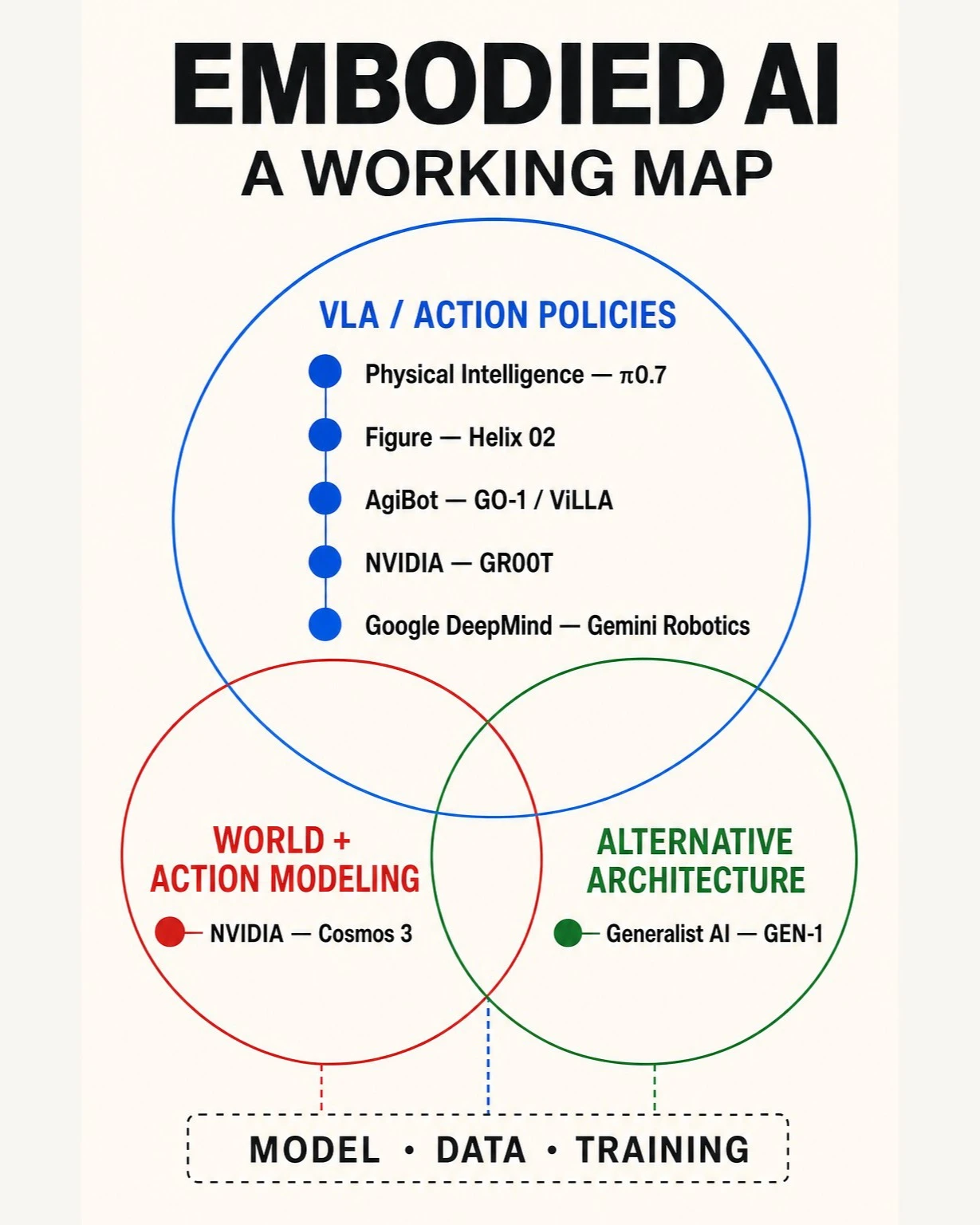
2/6 VLA / action-policy models:
- Physical Intelligence — π0.7
- Figure — Helix 02
- AgiBot — GO-1 / ViLLA
- NVIDIA — GR00T
- Google DeepMind — Gemini Robotics
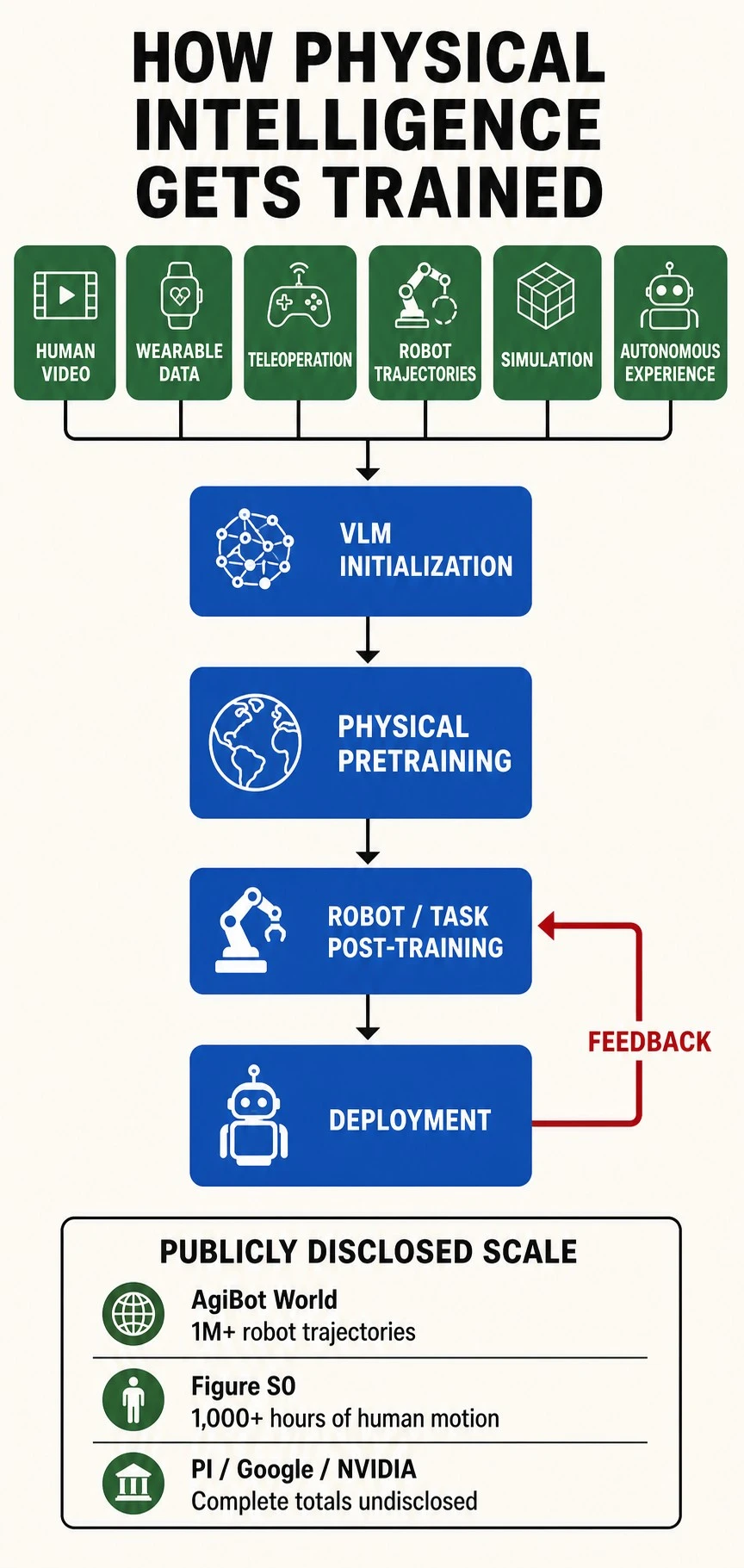
Common pipeline: VLM initialization → physical pretraining → robot/task post-training → deployment feedback.
3/6 Physical pretraining may combine human video, wearable data, teleoperation, heterogeneous robot trajectories, simulation, and autonomous experience.
Disclosed scale:
- AgiBot World: 1M+ robot trajectories
- Figure S0: 1,000+ hours of human motion
- PI, Google, NVIDIA: complete totals undisclosed
4/6 Post-training adapts a foundation model to a specific robot, task, and environment using demonstrations, corrections, RL, and autonomous rollouts.
Public data is limited:
- GEN-1: ~1 hour per reported task
- PI: some RL results use a few hours
- Most others: undisclosed
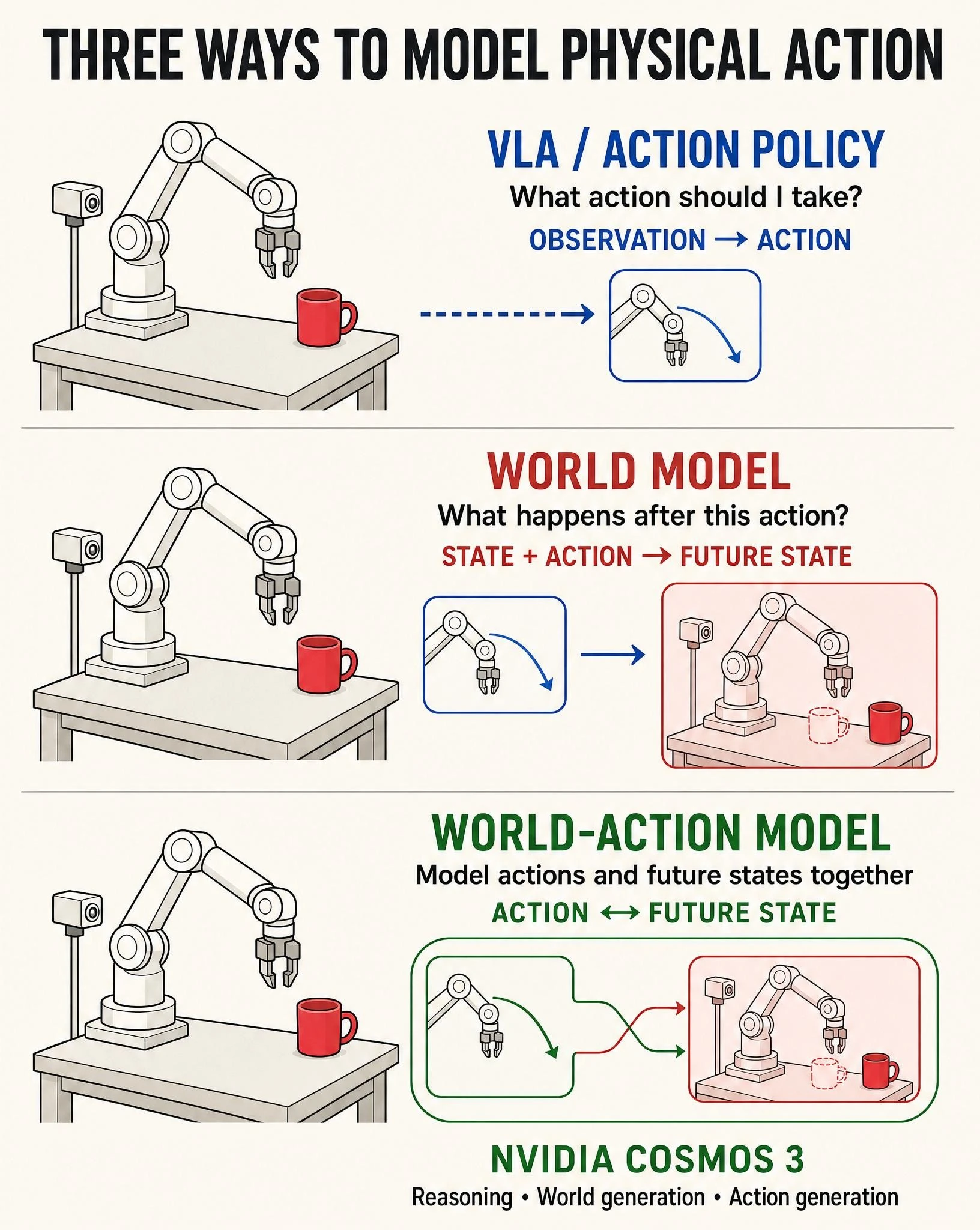
5/6 World and action modeling:
- NVIDIA — Cosmos 3
VLA: predicts which action to take.
World model: predicts what may happen after an action.
WAM: jointly models future world states and actions.
Cosmos 3 spans reasoning, world generation, and action generation, so these categories overlap.
6/6 An alternative architecture:
- Generalist AI — GEN-1
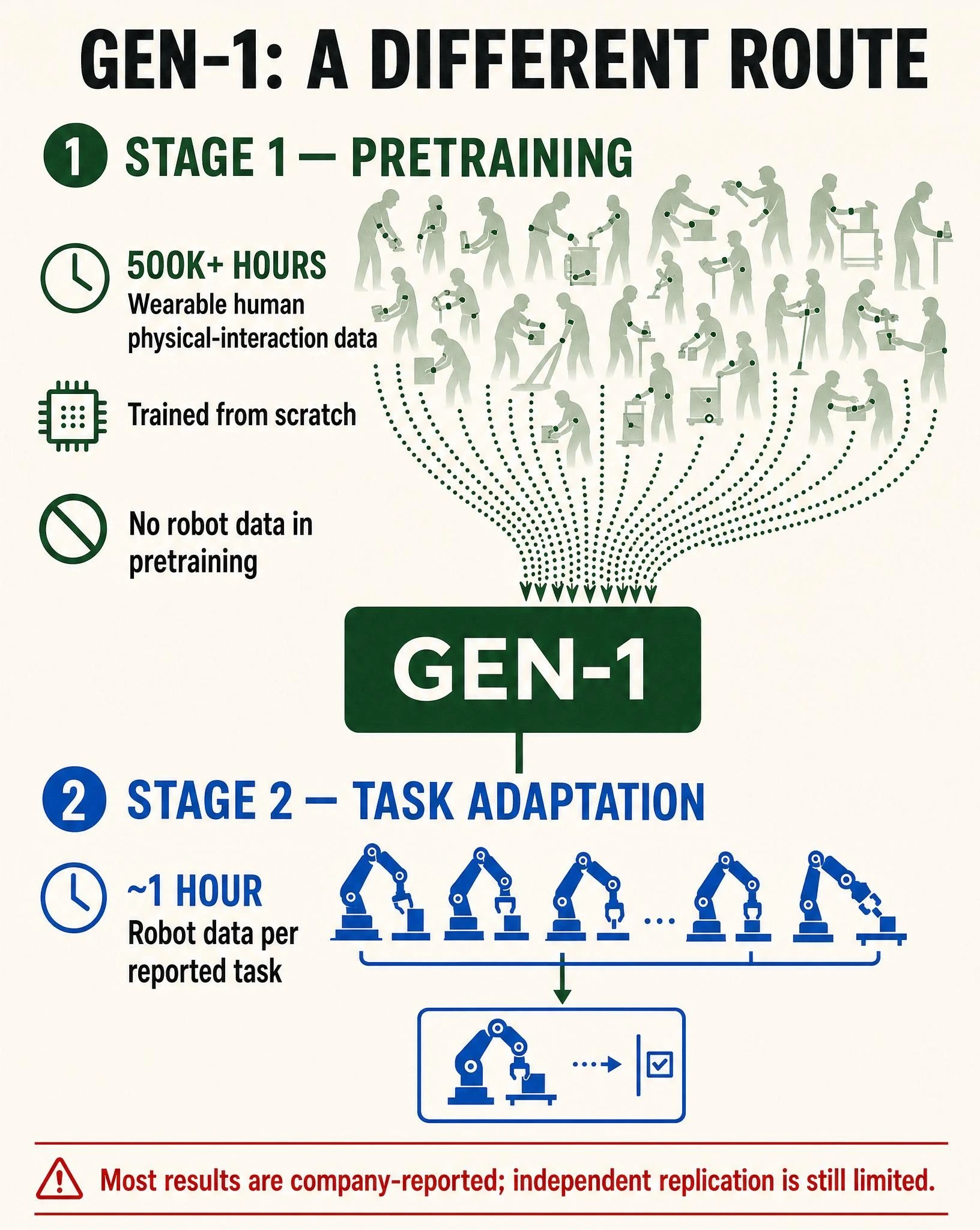
Generalist says GEN-1 was trained from scratch on 500K+ hours of wearable human physical-interaction data, with no robot data in pretraining.
For the reported tasks, adaptation used ~1 hour of robot data per task.
Independent validation remains limited.